
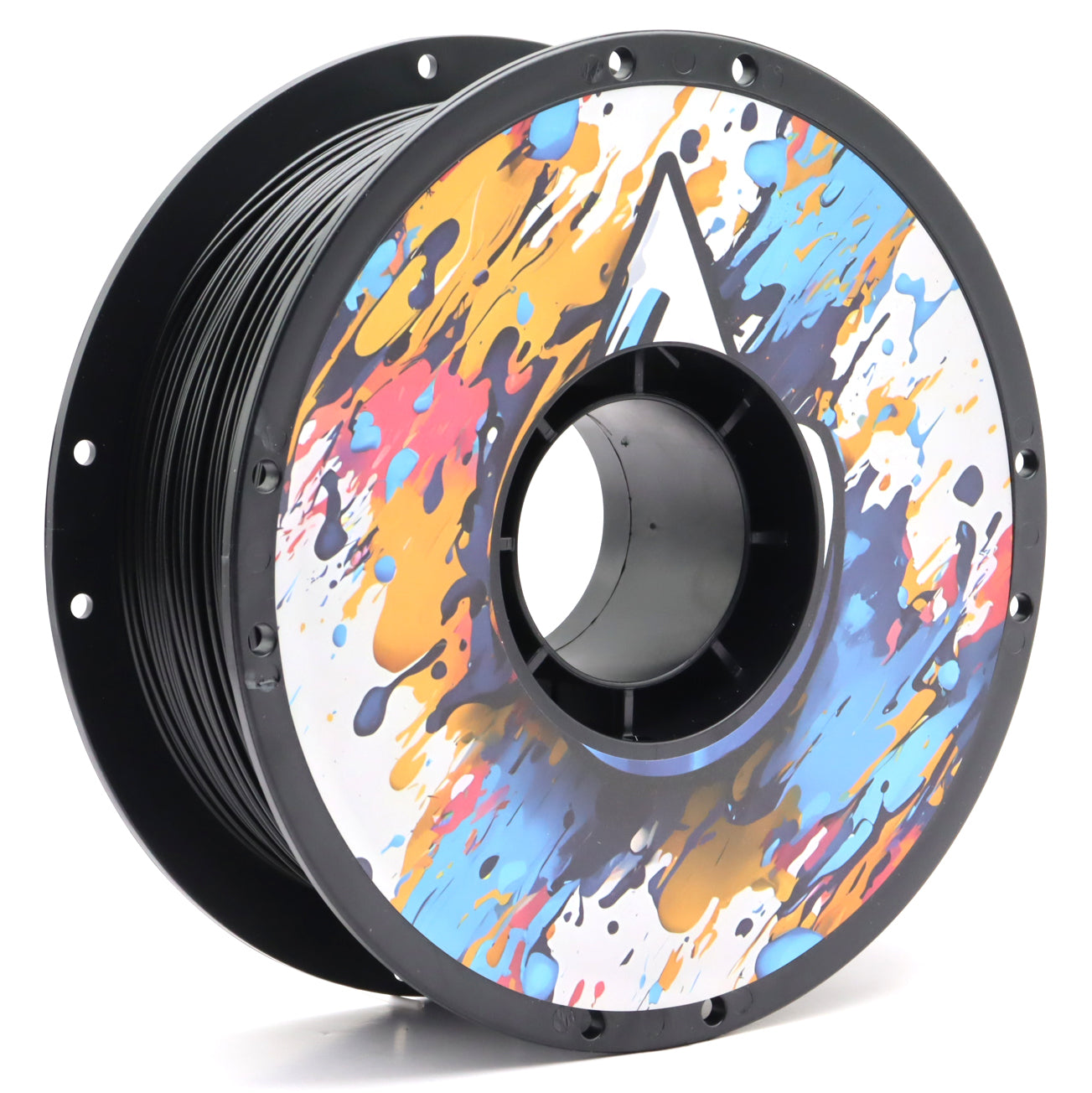
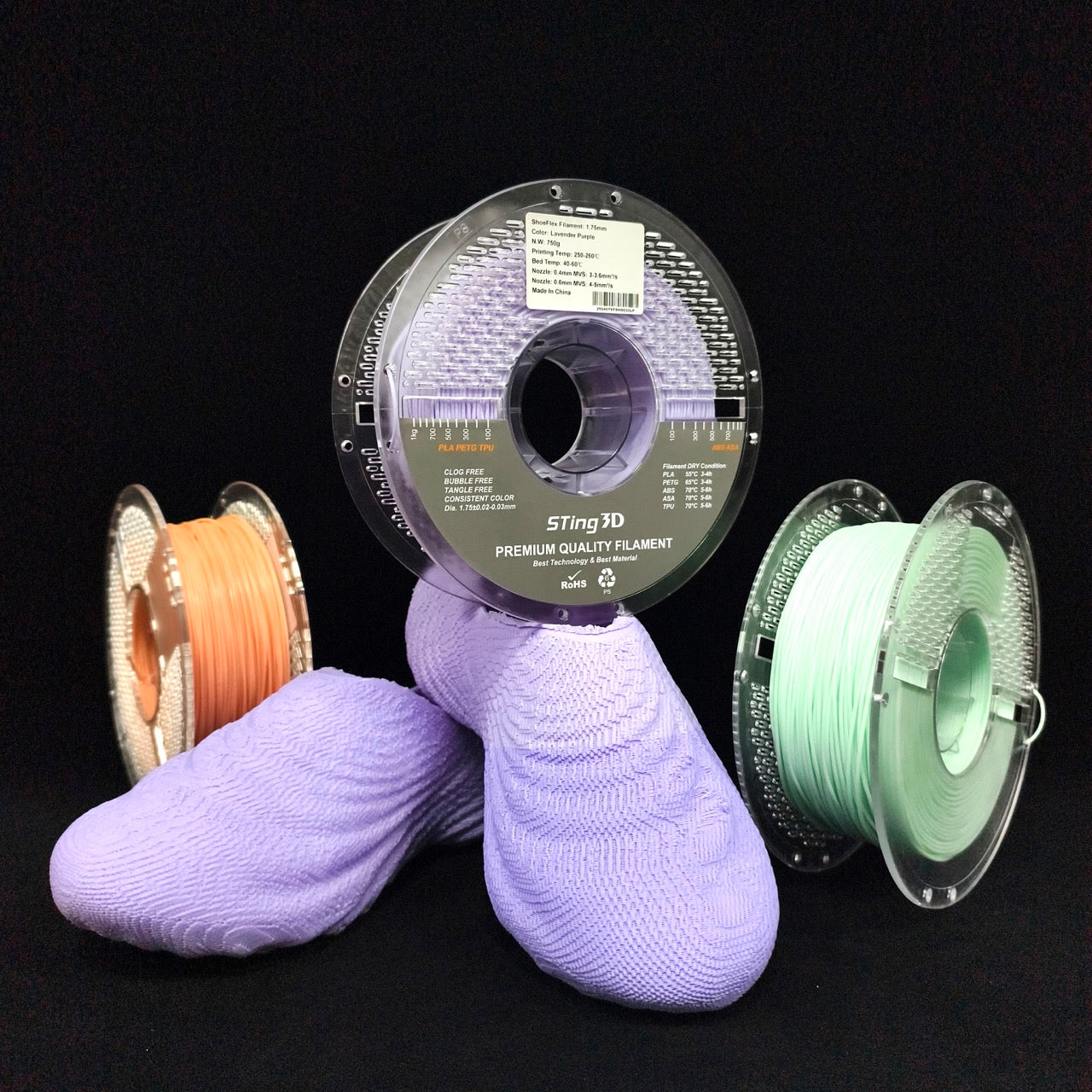


What is TPU Filament? TPU filament (Thermoplastic Polyurethane) is one of the most popular flexible 3D printing materials due to its combination of elasticity, durability, chemical resistance, and impact strength. Unlike rigid materials, TPU can bend, compress, and return to its original shape without cracking or breaking. TPU is available in different hardness levels on the Shore A scale; softer grades offer greater flexibility, while firmer grades provide improved structural support while still remaining flexible.
Why Choose Flexible Filament?
- Ideal for soft, flexible and impact‑resistant parts
- Available in multiple Shore hardness levels
- Strong layer adhesion for durable flexible prints
- Excellent shock absorption and wear resistance
- Perfect for functional, wearable and protective applications
Flexible Filament Types
Our flexible filament range includes:
- FPLA Filament – A flexible PLA‑based material that offers easier printing while maintaining excellent resilience and energy return.
- TPU 95A Filament – A versatile flexible filament offering an excellent balance of elasticity, durability and ease of printing.
- TPU 95A Silk – Flexible TPU with a glossy silk finish for applications requiring both flexibility and visual appeal.
- TPU 95A‑CF – Carbon‑fibre‑reinforced TPU that combines flexibility with increased stiffness and durability.
- ShoeFlex 9075A – Ultra‑flexible footwear filament designed for midsoles, cushioning structures and wearable products.
- InsoleFlex 9585A – Flexible TPU specifically engineered for insoles, orthotics and comfort‑focused footwear applications.
Common Applications
- Phone cases and protective covers
- Wearables, straps and wristbands
- Gaskets and seals
- Flexible joints and hinges
- Tool grips and ergonomic handles
- Vibration‑damping components
- Shock‑absorbing parts
- Custom insoles and footwear components
- Sports equipment and energy‑return structures
Printing with Flexible Filament
Flexible materials require slightly different print settings compared to standard PLA or PETG.
- Slower print speeds improve feeding consistency
- Direct drive extruders are recommended where possible
- Reduced retraction settings help minimise stringing
- Consistent temperatures improve layer bonding
- Dry filament delivers the best print quality
With the correct setup, flexible filaments can produce highly durable parts that withstand repeated bending, compression and impact.
Choosing the Right Flexible Filament
When selecting a flexible material, consider:
- The level of flexibility required
- Your printer’s extruder type (direct drive vs Bowden)
- Your print speed capabilities
- The intended application (protective vs structural)
- Required durability and wear resistance
For maximum flexibility and durability, TPU is typically the preferred choice. If you want easier printing with moderate flexibility, FPLA can be an excellent alternative.
Explore More Filament Options
If your application requires higher rigidity or heat resistance, browse our PLA filament, PETG filament, ASA filament, ABS filament, or engineering filaments.
All flexible filament ships fast from Australia, with same‑day processing available for most orders.