





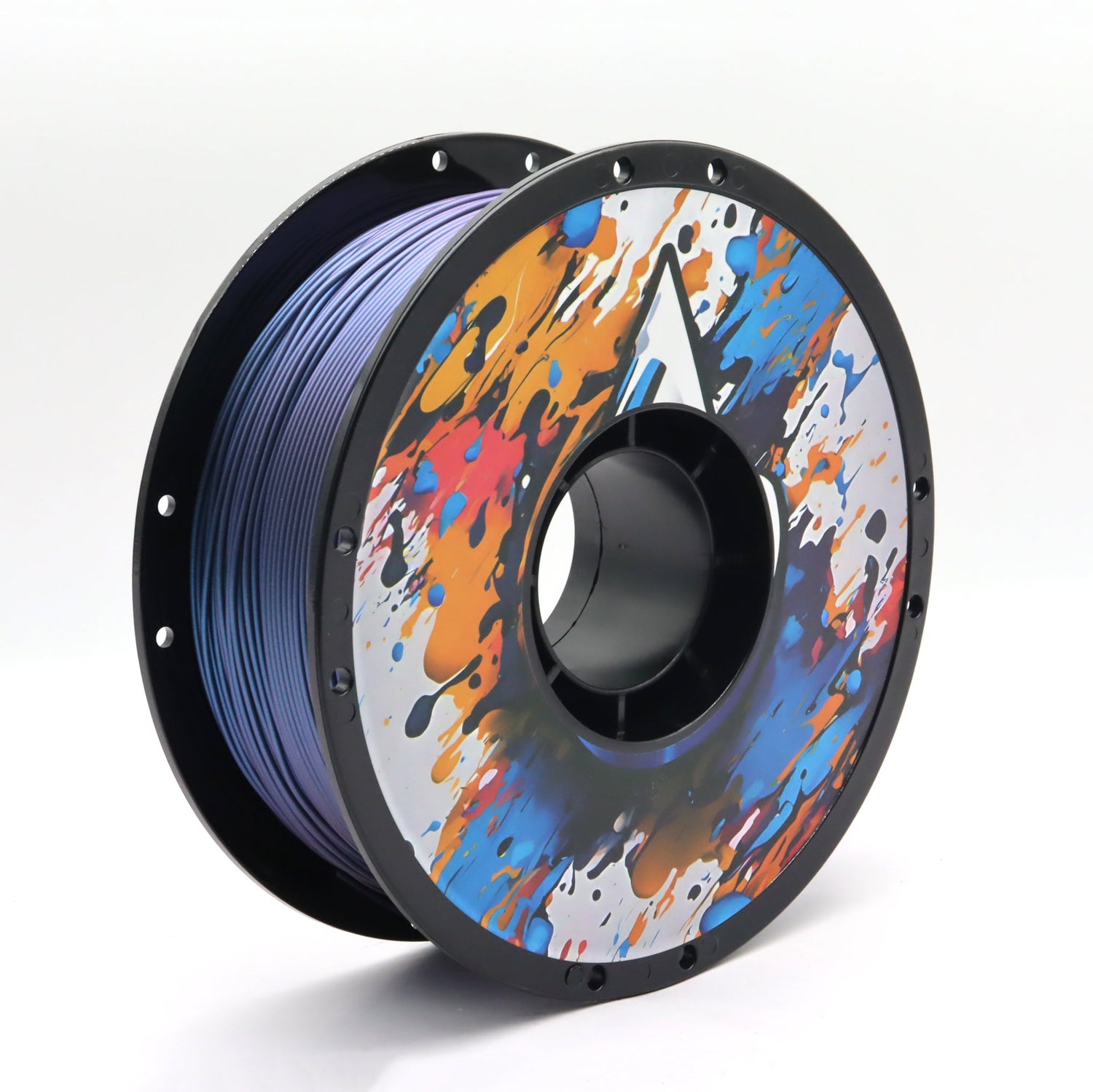


Why Choose PLA Filament?
- Easy to print with no enclosure required
- Low warping with strong layer adhesion
- Bright colours and smooth surface finishes
- Reliable performance on most FDM 3D printers
Everyday PLA
Start here if you want a workhorse roll for general printing:
- PLA Pro (PLA+) – improved layer bonding and impact resistance, without losing PLA’s ease of use
- PLA Matte – soft, low-sheen surface that helps hide layer lines
- PLA Silk – glossy, almost polished finish straight off the printer
- PLA High Temp – holds its shape where standard PLA starts to soften, still on ordinary PLA settings
- PLA CF – carbon fibre reinforced core for extra stiffness and a refined surface
- PLA Aero – foaming PLA that expands during extrusion for real weight savings
Effect & Specialty PLA
Finishes that need no paint or post-processing:
- PLA Metallic – reflective pigments for a brushed or polished metal look
- PLA Glitter – fine glitter particles that shimmer under light
- PLA Marble – mineral flecks for a genuine stone-and-speckle look
- PLA Rock – marbled mineral streaking running through every spool
- PLA Wood – blended with fine timber particles, so prints look and sand like real wood
- PLA Translucent – lets light pass through for a semi-clear, glass-like finish
- PLA Crystal – semi-translucent with a fine shimmer and light-reflective finish
- PLA Glow in the Dark – phosphorescent particles charge under light, then glow in the dark
Multicolour PLA
Two or three colours co-extruded into a single strand, shifting as the model prints:
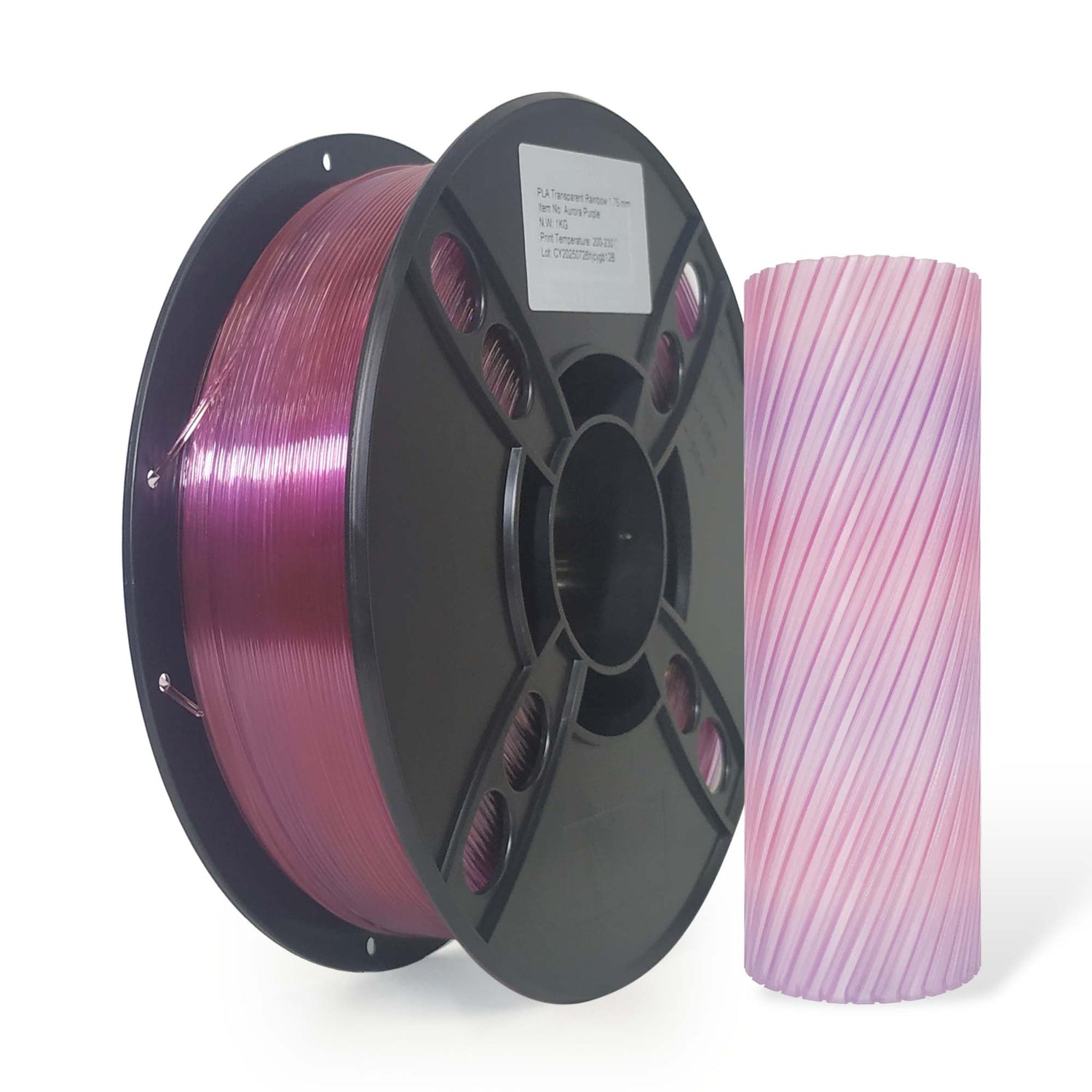
- PLA Rainbow and Gradient – the fastest way to make a standard print stand out
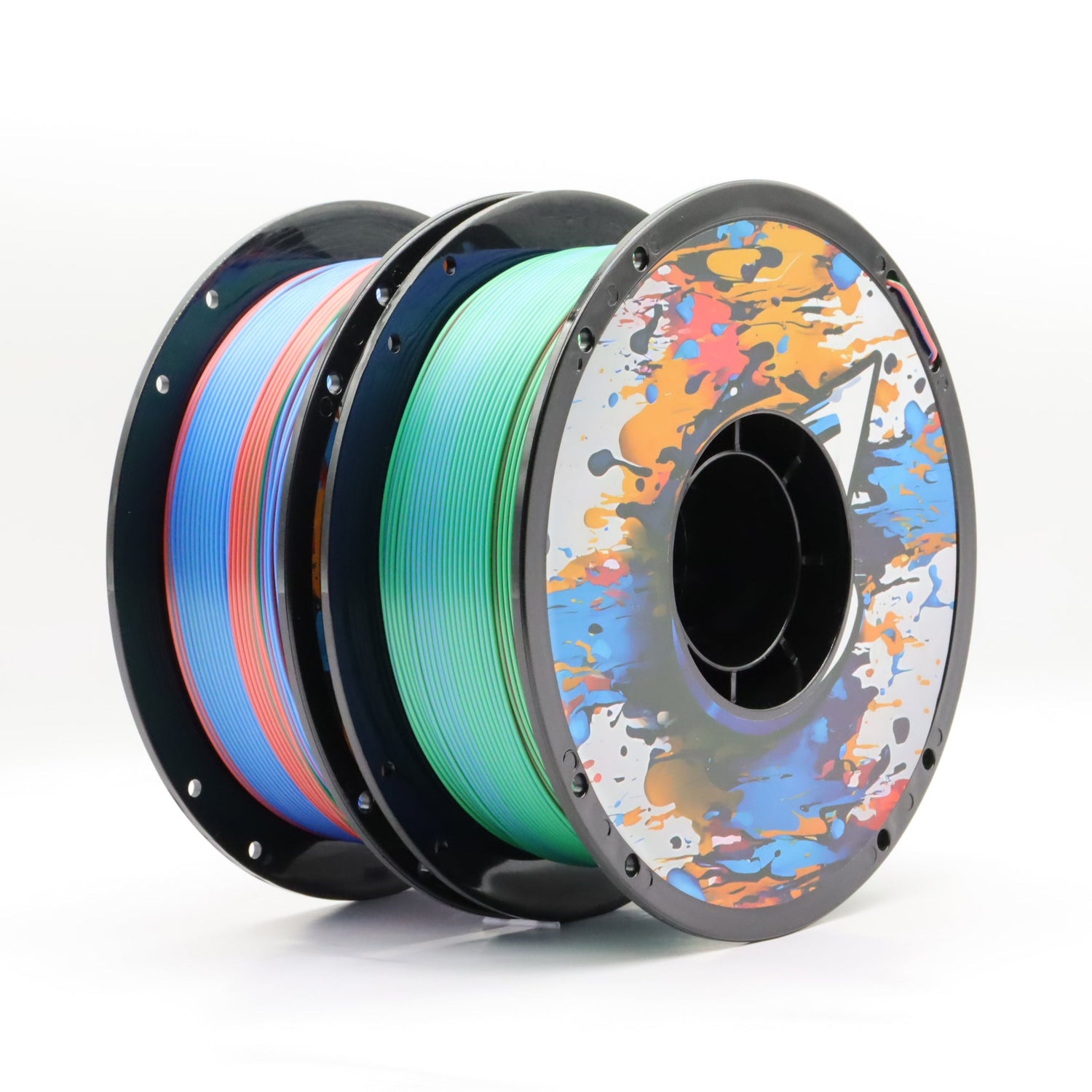
- PLA Tri Colour – three colours side by side in one 1.75mm strand
- PLA Tri Matte – three tones with a soft matte surface, without the shine of silk
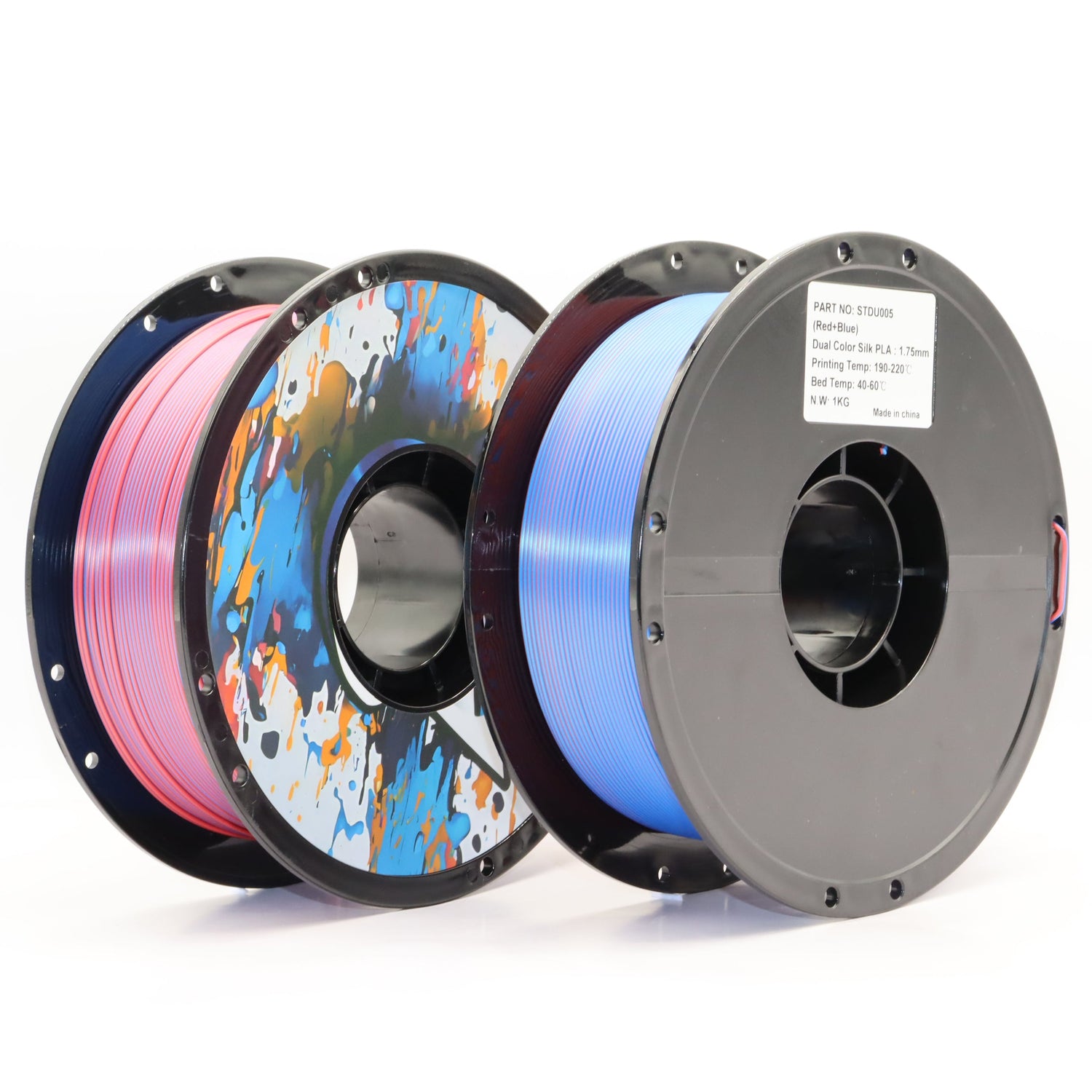
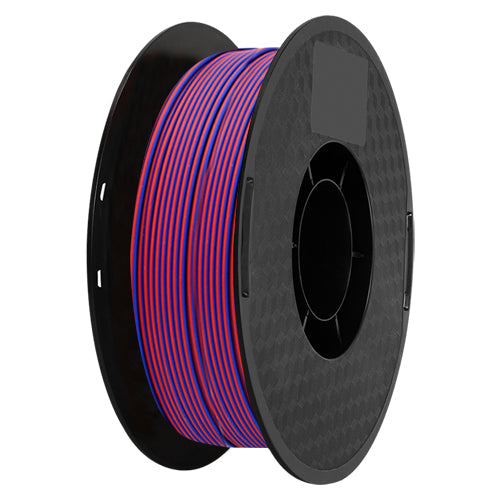
- PLA Dual Silk – two colours in a single strand with a glossy finish
- PLA Dual Matte – two-tone matte, soft and non-reflective
- PLA Saturn – deep black base with a single accent colour that flows along the print
- PLA Cosmic – glitter, pearlescent, gradient and translucent effects in one range
Printer Compatibility
All 1.75mm PLA filament is designed for smooth extrusion and consistent results. Compatible with Bambu Lab, Prusa, Creality Ender, and most FDM 3D printers.
Best Uses for PLA Filament
- Display models and decorative prints
- Prototypes and concept designs
- Household organisers and accessories
- Cosplay props and figurines
- General-purpose everyday printing
PLA Guides
Not sure which roll you need? Our guides go deeper than a product page can:
- PLA vs PETG: Which Filament Should You Use? – where PLA stops being the right choice
- Does PLA Filament Delaminate Over Time? – our own long-term testing
- How To Store 3D Printer Filament Properly – keeping PLA dry through an Australian summer
- Best 3D Printer Filament for Beginners – start here if this is your first roll
Explore More Materials
Need something stronger or more heat resistant?
- PETG filament – tougher and more heat resistant than PLA
- ABS filament – for parts that need to handle heat and impact
- Engineering Filament range – Nylon, Polycarbonate, PET CF and more